3
documents that match in three-way verification: order, receipt, and invoice
0
stockouts due to oversight: a replenishment rule generates a request when the minimum is reached
1
a request for quotation sent to several suppliers through bidding — compare offers before choosing
100%
purchases with suppliers selected by price, delivery time, and minimum quantity
Your purchases in action
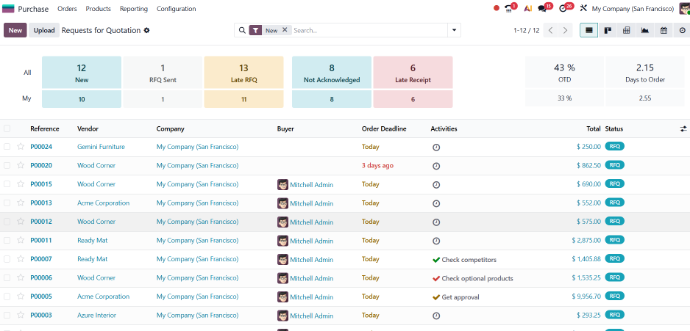
REQUEST
From RFQ to order
Requests for quotation that become confirmed purchase orders.
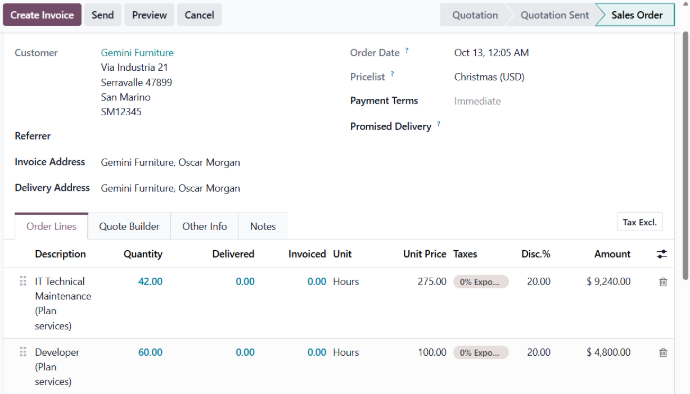
SUPPLIERS
Price, delivery and minimum quantities
Each vendor's terms by product.
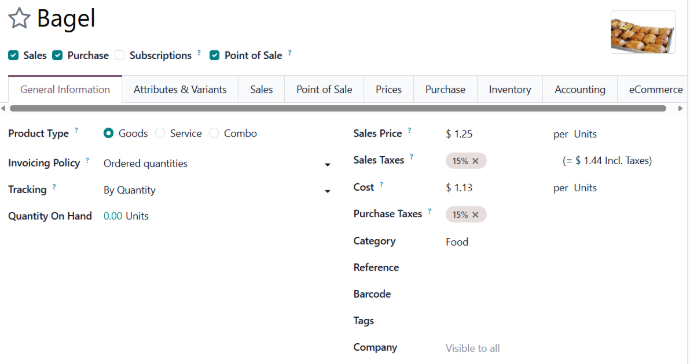
REPLENISH
Minimum stock triggers purchases
The rule that triggers purchase requests when stock falls.
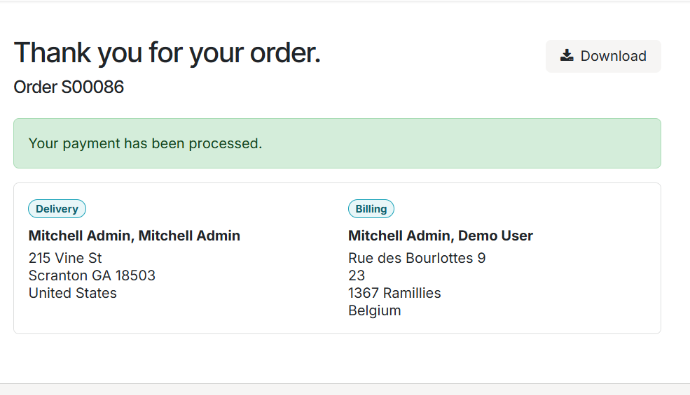
THREE-WAY MATCHING
Pay only for what was received
Orders, receipts, and invoices matched before payment.
Purchasing driven by data, not guesswork
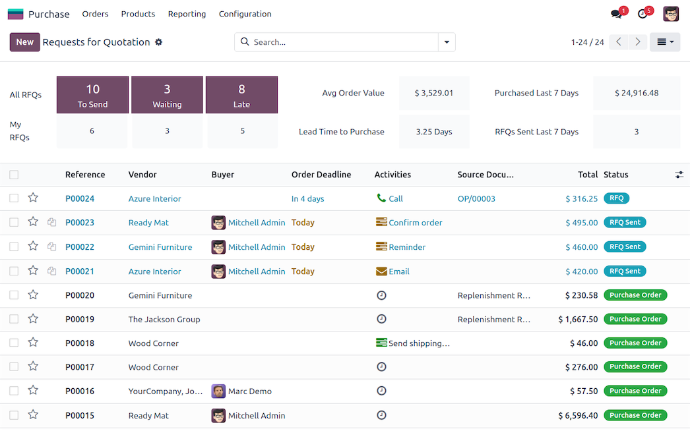
In Odoo, purchasing is a controlled workflow: confirm RFQs, record actual quantities received, and use billing control policies to determine when supplier invoices are created — with three-way matching of orders, receipts, and invoices so you only pay for what arrived. Even the start can be automated: minimum stock triggers purchase requests.
Requests for quotation converted into purchase orders
Vendor price lists: price, lead time and minimum quantities
Reordering rules that generate requests automatically
Invoice control: based on ordered or received quantities
Three-way matching: order, receipt and invoice
Purchase agreements: requests for quotation and blanket orders
Everything you need, already included...
Workflow with safeguards
RFQs are sent to suppliers and confirmed as purchase orders; receipts capture what arrived — and invoices are created according to your billing policy.
Each supplier has its own rates
Vendor price lists record prices, lead times, and minimum quantities by product — the basis for smart purchasing decisions.
Automatic replenishment
Min/max rules monitor stock: when it falls below the minimum, a request to replenish to the maximum is generated using the vendor on the product list.
Based on actual demand
With the make-to-order manufacturing route, confirming a sales order triggers a purchase request for exactly what's sold — buy precisely what demand requires.
Three-way matching before payment
Purchase agreements for comparison
Purchase tenders send RFQs to several suppliers for comparison; blanket orders establish terms with a vendor for future purchases.
PURCHASE + INVENTORY
Stock reaches the minimum
and the request already exists
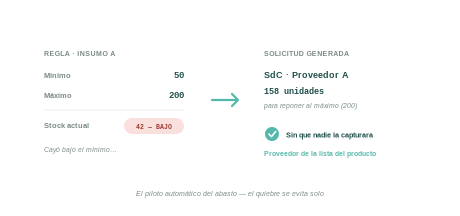
Replenishment rules automate supply: define minimum and maximum stock per product, and when inventory falls below the minimum, Odoo generates an RFQ to replenish to the maximum — selecting a vendor from the product price list.
Minimum and maximum levels by product
Requests generated automatically
Supplier selected from the product’s supplier list
PURCHASE + SUPPLIERS
One request,
multiple suppliers competing
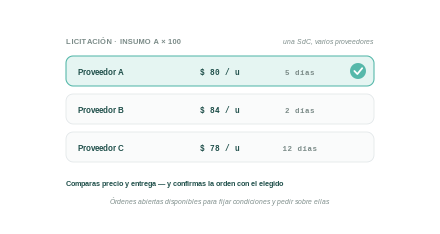
Purchase agreements encourage supplier competition: tenders send RFQs to multiple vendors to compare terms before committing, while blanket orders set conditions for purchases throughout a period.
Competitive bidding with multiple suppliers
Compare before confirming
Open orders with agreed terms
PURCHASE + INVOICING
The supplier invoice
it has to reconcile before payment
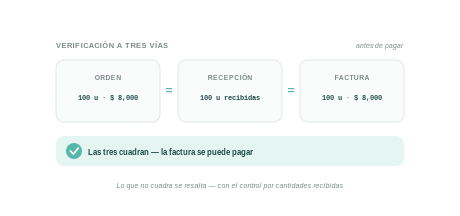
Billing control policies decide whether invoices are created at ordering or receipt. With received-quantity control, three-way matching compares orders, receipts, and invoices: mismatches are flagged and payment waits until they match.
Control based on ordered or received quantities
Three-way matching: order ↔ receipt ↔ invoice
Discrepancies highlighted before payment
WHO IT'S FOR
If your sales team works through email and spreadsheets, this is for you.
Manufacturers with raw materials
Supplies replenished before stockouts — the rule keeps watch for you.
Retailers that replenish frequently
Minimum and maximum stock by product, with suppliers already selected.
Finance teams reconciling invoices
Three-way automation — pay only for what was ordered and received
Businesses negotiating with several suppliers
Purchase tenders for comparison and blanket orders to lock in terms.
FREQUENTLY ASKED QUESTIONS
What we get asked most before getting started
01 How does the purchasing process work?
Send RFQs to suppliers, confirm purchase orders, receive products, and create supplier invoices according to your billing policy, matched against the other records.
02 How do I select a supplier?
With product vendor price lists: each supplier has a price, lead time, and minimum quantity. This information guides decisions and automatic supplier selection for Replenishment.
03 Can I automate purchasing?
Yes — with Replenishment rules: define min/max stock by product, and falling below minimum generates a request to replenish to maximum. With make-to-order routes, confirmed sales orders generate requests for what's sold.
04 What is three-way matching?
Matching purchase orders, receipts, and supplier invoices works with received-quantity controls and highlights discrepancies, so you only pay for goods actually ordered and received.
05 What are purchase agreements?
Two tools: purchase tenders, which send requests to multiple suppliers for comparing terms before choosing, and blanket orders, which establish terms with a vendor for future orders.
06 Can I control who approves purchases?
Yes — enable purchase order approvals in settings, so orders exceeding your threshold go through the appropriate authorization.


