Three pain points this sector knows all too well
01 One piece of furniture, a thousand combinations
Finish, fabric, size: customers configure their own version, and every combination changes the materials and cost.
HOW ODOO SOLVES IT
Attribute-based product variants with the correct BoM for each combination.
02 Standard lines and custom orders, together
Fast-moving products are made for stock; custom items are made only when sold, and both share the same workshop.
HERE'S HOW ODOO SOLVES IT
Routes that work together: replenishment rules for standard products and make-to-order for custom items. Every order has a clear reason to exist.
03 Board yield is what it is
Between cuts and wood grain, actual timber consumption never matches the plan — and the cost reflects it.
HERE'S HOW ODOO SOLVES IT
Orders record actual versus theoretical consumption and the cost of furniture based on the wood actually used.
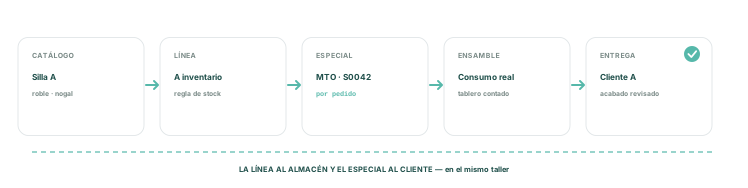
From catalog to the customer's living room
standard production to stock and custom orders in the same workshop
The apps this industry uses every day


SCENE 1 · OPTIONS
Oak or walnut,
linen or leather
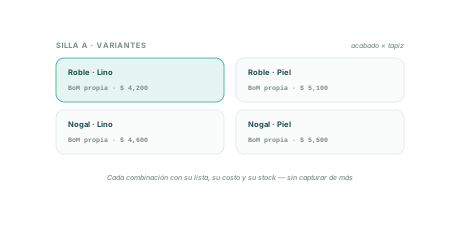
Chair A is defined using attributes, and every combination exists as a variant — with its own bill of materials, cost, and stock. The catalog grows without multiplying data entry.
Variants by finish and upholstery
Bill of materials by combination
Cost and stock by variant
The standard line to the warehouse,
the custom item for the customer
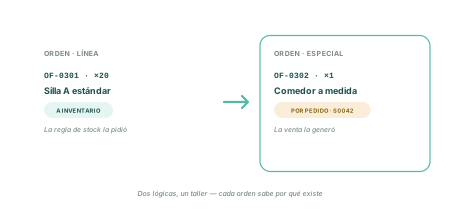
Standard chairs are replenished by stock rules, while custom dining sets are produced from sales using make-to-order — two methods in one workshop, each order driven by a clear reason.
Standard product lines kept in stock
Made-to-order specials
Every order has a clear reason for being created
SCENE 3 · DASHBOARD
The cash count shows
how much it yielded
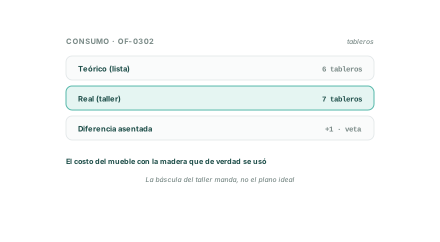
Orders record the panels actually used to make furniture — including grain, cuts, and mistakes — against the plan: costs reflect the real workshop, not an ideal drawing
Actual board consumption by order
Variance from theoretical quantities clearly visible
The true cost of each piece of furniture
WHO IT'S FOR
If your product is assembled from options, this is for you.
Furniture factories
Standard and custom lines working together smoothly.
Custom woodworking shops
Every order with its bill of materials and actual cost.
Kitchens and closets
Projects by variant, from design to installation.
Institutional furniture
Volume orders with committed dates.
FREQUENTLY ASKED QUESTIONS
What the industry asks us before getting started
01 Can Odoo handle configurable furniture?
Yes — variants based on attributes (finish, upholstery, size), each combination with its own bill of materials, cost, and stock level.
02 Can I manufacture for stock and to order at the same time?
Yes: standard products are replenished through inventory rules, while custom items are made from sales with the make-to-order route — both processes work together.
03 How do I track wood consumption?
Manufacturing orders record actual versus planned material consumption — furniture costs reflect what the workshop really used.
04 Can I sell my catalog online?
Yes — eCommerce displays catalogs with variants, sharing Inventory with the rest of your operations.
05 Does this require a huge implementation
No — in stages: catalogs with variants and Sales first, then Manufacturing and detailed Inventory. Let's discuss your case..
Other manufacturing industries
Construction and Building Materials
Lots, construction deliveries, and multiple warehouses